


Underground Garage Dehumidifier DH-8288C Dehumidifier
Contact Info
- Add:No. 15 Jiaqi Road, Xianlin Subdistrict, Yuhang District, Hangzhou City, Zhejiang Province, 3rd Floor, South Building 1, Zip: 311100
- Contact: 郑学乐
- Tel:13357144970
- Email:1013522671@qq.com
Other Products


Basement Garage Dehumidifier DH-8288C Industrial Dehumidifier
Warehouses and factories, as critical sites for material storage and production, require strict control of internal humidity. Excessive moisture can lead to dampness, mold, and decay of materials, as well as affect equipment performance and lifespan. Therefore, effectively addressing air humidity issues in warehouses and factories has become an urgent problem. Industrial dehumidifiers, as specialized humidity control equipment, can effectively resolve these issues.
I. Principles of Industrial Dehumidifiers
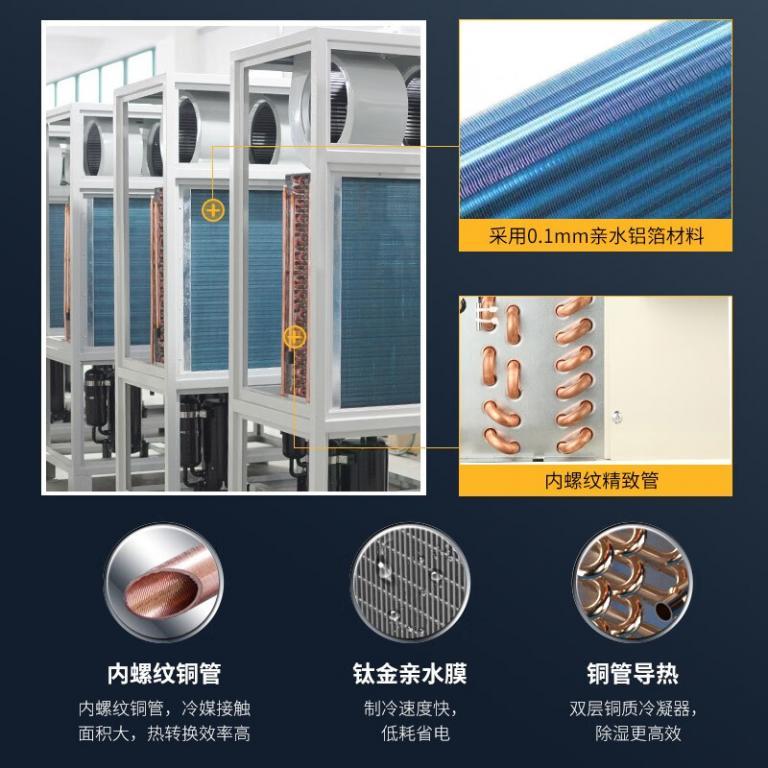
Industrial dehumidifiers primarily operate on two principles: refrigeration and adsorption. Refrigeration dehumidifiers use refrigerants to absorb heat from the air in the evaporator, causing water vapor in the air to condense into water droplets and be discharged. Adsorption dehumidifiers, on the other hand, use desiccants to adsorb water molecules from the air onto their surface, and then release the water molecules through heating, achieving dehumidification.
II. Applications of Industrial Dehumidifiers
Industrial dehumidifiers are mainly used in places requiring humidity control, such as warehouses, factories, and equipment rooms. These environments demand high standards for air humidity to prevent issues like material dampness and equipment failure caused by moisture. Additionally, industrial dehumidifiers can improve the processing environment in production workshops, enhancing product quality and production efficiency.

III. Selection and Usage of Industrial Dehumidifiers
1. Selection
When selecting an industrial dehumidifier, it is essential to choose based on actual needs. Consider the following factors:
(1)Dehumidification capacity: Select an appropriate dehumidifier model based on the area and height requiring dehumidification.
(2)Usage environment: Different environments have varying requirements for dehumidifiers; choose one suitable for the specific conditions.
(3)Noise level: For locations requiring low noise, opt for a dehumidifier with low noise output.
(4)Energy consumption: For places needing long-term operation, choose a dehumidifier with lower energy consumption.
2. Usage
When using an industrial dehumidifier, pay attention to the following points:
(1)Read the instruction manual carefully before use to understand the operating procedures and methods.
(2)Adjust the humidity level according to actual needs to avoid excessive dehumidification that may make the air too dry.
(3)Regularly check the dehumidifier’s operating condition, including whether the filter, drainage pipes, and other components are clean and free of unusual noises.
(4)Prioritize safety during use to prevent accidents such as electric shocks.
As specialized humidity control equipment, industrial dehumidifiers play a vital role in warehouses, factories, and other settings. By understanding the principles, applications, selection, and usage of industrial dehumidifiers, it is possible to effectively address air humidity issues in warehouses and factories, improving material preservation and extending equipment performance and lifespan.

| Industry Category | Chemicals/Chemical Intermediates/Intermediate Compounds |
|---|---|
| Product Category | |
| Brand: | 百科特奥 |
| Spec: | DH-8288C |
| Stock: | 150 |
| Manufacturer: | 杭州特奥环保科技有限公司 |
| Origin: | 113301 |


